


Eye Disease Center
Backed by proven expertise, we safeguard your eye health with confidence
What is strabismus?
A condition where the two eyes do not point straight ahead
Causes of strabismus are varied
Strabismus may appear when there is a refractive error, when the muscles attached to the eye exert unequal force, when the central pathways connected to the eyes are disturbed, or when there is a hereditary predisposition.
Symptoms of strabismus
Light sensitivity
Drifting when tired
Frequent blinking
Head posture
Off-center gaze
Light sensitivity
Squinting one eye outdoors in bright light.
Drifting when tired
The eye drifts or focus shifts when sleepy or absent-minded.
Frequent blinking
Frequent eye rubbing or blinking.
Head posture
The head is tilted or turned to look at objects.
Off-center gaze
From the outside, the eye appears to focus in an unusual direction.
Squinting one eye outdoors in bright light.
The eye drifts or focus shifts when sleepy or absent-minded.
Frequent eye rubbing or blinking.
The head is tilted or turned to look at objects.
From the outside, the eye appears to focus in an unusual direction.
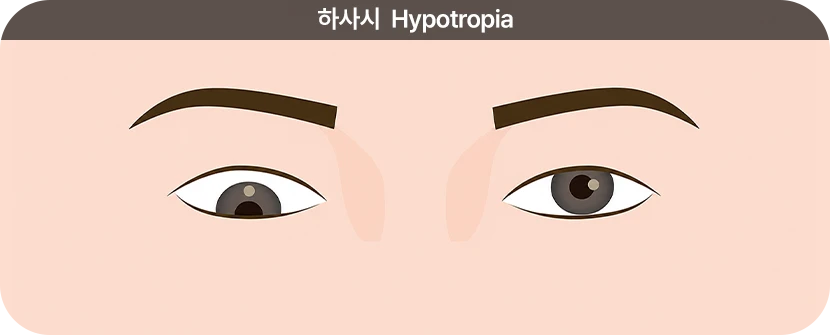
Six types of strabismus
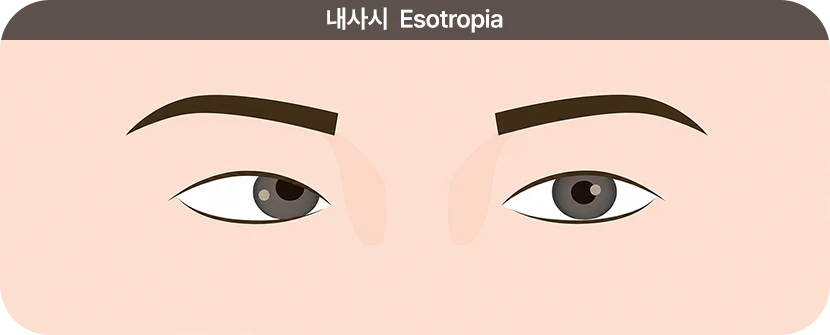
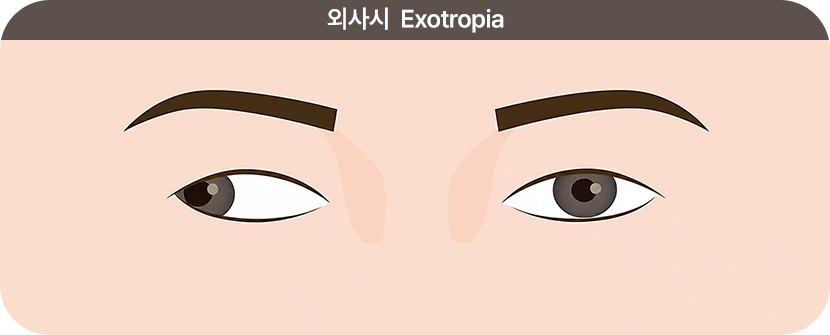
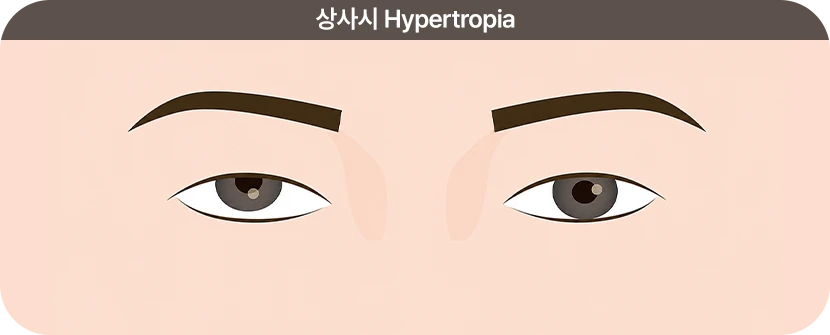
Pseudoesotropia
In many Asian children, a low and wide nasal bridge widens the gap between the eyes and creates an inwardly turned appearance even though true alignment is normal. Pseudoesotropia does not affect vision, and the apparent crossing resolves as the bridge of the nose develops with growth.
Infantile Esotropia
Strabismus appearing in infants under 6 months of age, with one eye severely deviated toward the nose. The angle of deviation is large and may coexist with other types. Early detection and surgery are critical — left untreated it can adversely affect visual development and lead to amblyopia.
Accommodative Esotropia
The most common form of pediatric strabismus, usually caused by excessive accommodation in patients with significant hyperopia. Wearing glasses that correct the hyperopia eliminates the deviation; surgery may be required when glasses alone do not fully correct the alignment.
Intermittent Exotropia
The most common form of strabismus in Korea. Alignment is preserved most of the time, but the eye drifts outward when the patient is tired, sleepy, or staring blankly into the distance. A blink or change of focus restores alignment.
Paralytic Strabismus
Paralytic strabismus occurs when one of the nerves controlling the six extraocular muscles is impaired, restricting movement in a specific direction. Common causes include patients with underlying conditions such as diabetes, hypertension, or thyroid disease, or cranial neuropathy following cerebrovascular disease, brain tumors, or viral illnesses.
Patients with paralytic strabismus may experience significant diplopia and eye-movement disturbance, and to reduce double vision they often turn or tilt the head, develop eyelid drooping, or have an enlarged pupil on the affected side. A careful ophthalmic examination is required to identify which muscle or nerve is involved, and brain MRI is recommended to determine the underlying cause.
When the condition develops as a complication of diabetes or hypertension, the underlying disease is treated for at least six months while monitoring progress; if there is no improvement, prism glasses or, in severe cases, surgery may be performed. The primary goal is to eliminate diplopia in primary gaze, and multiple surgeries may be required.
Sensory Strabismus
Develops when one eye has significantly reduced vision or blindness from various causes. Over time, deviation gradually appears in the affected eye, and surgery is often performed for cosmetic reasons.


