


Eye Disease Center
Backed by proven expertise, we safeguard your eye health with confidence
Pterygium
Pterygium — also called 'surfer's eye' — is a conjunctival degeneration that mainly arises on the inner side of the eye. A triangular or wedge-shaped fibrovascular tissue grows from the conjunctiva (white of the eye) onto the cornea, occasionally inducing astigmatism, and if it advances over the pupil it can impair vision.
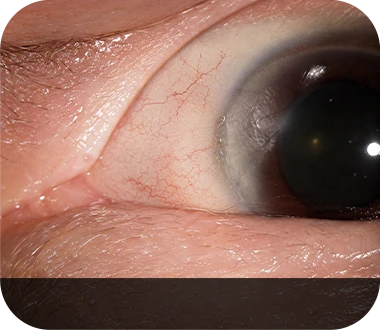
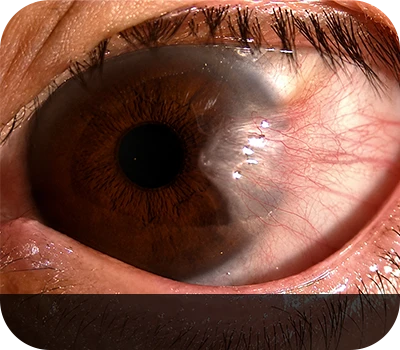
- Slowly enlarging growth with inflammation, redness, itching, and a cosmetic concern
- Progressive corneal encroachment that can block the pupil and impair vision
- Artificial tears act as a lubricant when irritation or a foreign-body sensation is present
- Early surgical removal when vision is impaired, scarring is left, or recurrence is likely
Conjunctivochalasis
1-minute radiofrequency procedure tightens the loose conjunctiva
Repeated inflammation or sustained irritation causes the conjunctiva surrounding the eye to slacken and fold, blocking the tear drainage opening at the lower eyelid and causing tears to overflow. It is most often seen between the lower eyelid and the eyeball.
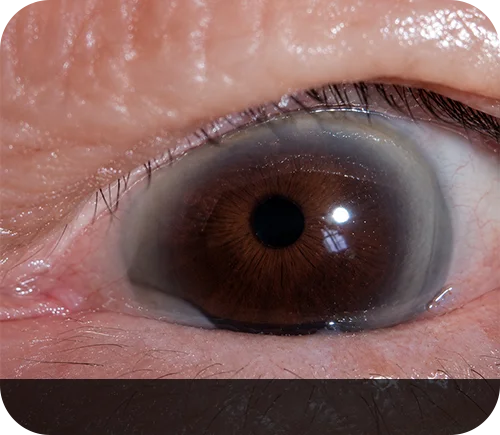
- Dry-eye-like symptoms (foreign-body sensation, dryness, grittiness) and watery eye
- Pain from exposure of the loosened conjunctiva
- Artificial tears, antihistamines, or steroid eye drops
- Excision of the redundant conjunctiva, amniotic membrane grafting, and conjunctival closure
Ptosis
Ptosis refers to a state in which the upper eyelid droops because the levator palpebrae superioris muscle — which raises and lowers the eyelid — has weakened, partially covering the pupil and giving the eye a smaller appearance. This condition is called Ptosis (drooping eyelid).
Ptosis is one of the most common conditions in oculoplastic surgery, and most cases are treated with surgical correction.
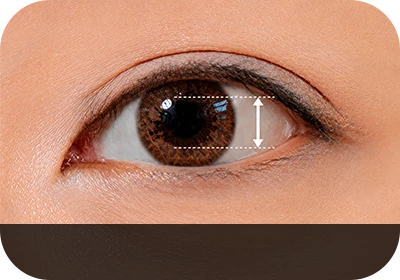
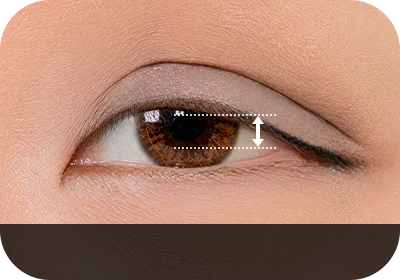
Types & Symptoms of Ptosis
- Caused by incomplete development of the levator muscle present from birth
- Once the child can hold up the head and focus on objects, they tilt the chin up and contract the forehead to lift the eyelid in order to see
- Regular vision testing is required because amblyopia may develop
- Gradual weakening of the upper eyelid function with age, causing the eyelid to droop
- Caused by senile changes, trauma, post-surgical damage or weakening of the levator muscle, neurological conditions, or systemic diseases
- The drooping eyelid blocks the upper visual field; constantly trying to lift the eyelid leads to rapid eye fatigue.


