



Reflections on My Corneal Transplant Training
By Dr. Gyung Bai Choi, Chief Director
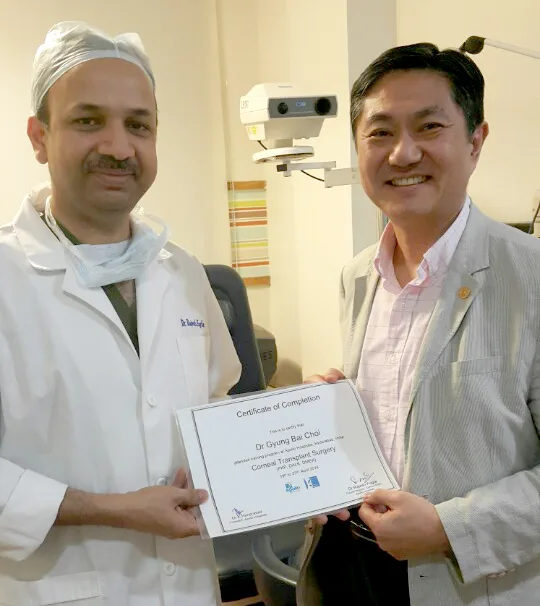
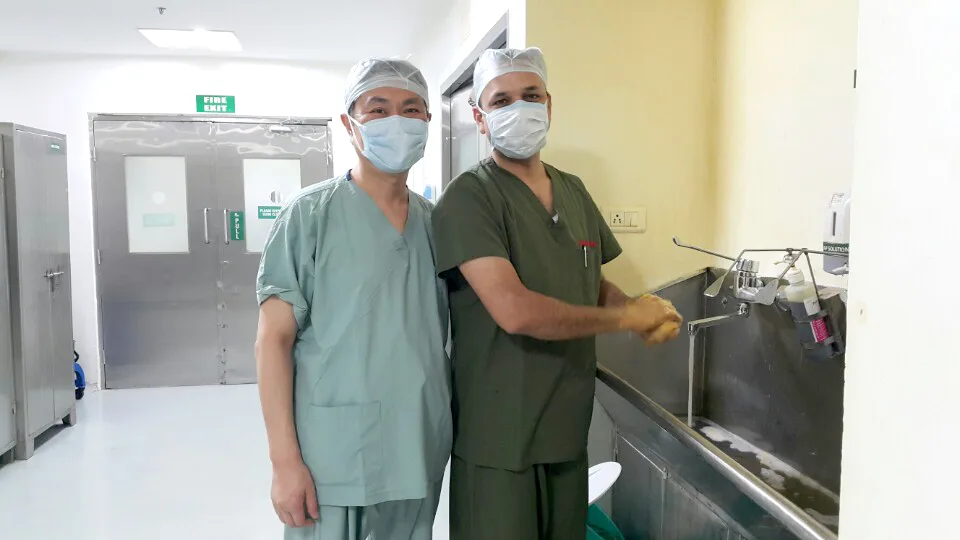
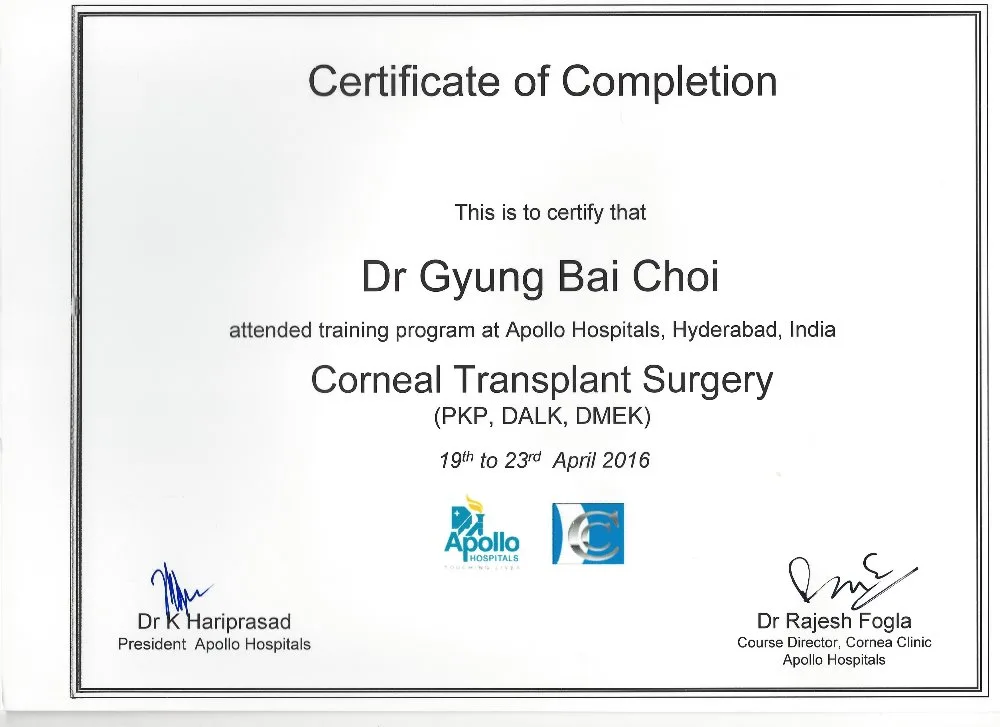
It feels like only yesterday that I returned from Apollo Hospitals in Hyderabad, India, where I received training in corneal transplantation, but seven months have already passed.
Thanks to everyone’s concern and prayers, I completed the training and returned safely.
I am only now finally sharing my reflections with you.
Hyderabad, where I stayed, is three hours behind Korea. The average temperature ranges from 40°C to 50°C, but because the humidity is low, it feels much cooler than the actual temperature.
One distinctive feature of this region is that, unlike the surrounding areas, Muslims make up approximately 40 to 50 percent of the population.
Apollo Hospitals is regarded as one of the world’s top three hospitals.
I visited its Hyderabad branch, which has approximately 550 beds and operates a separate medical center for international patients, providing a well-organized and efficient healthcare system.
The hospital grounds were extremely large, comparable in scale to those of a university hospital.
One unusual feature of the hospital was that, despite providing premium medical services in India, elevator use was restricted as a cost-saving measure, except for transporting cargo or hospital beds.
Moreover, the ophthalmology department was located in the basement, so I unintentionally got quite a bit of exercise during my stay.
Corneal transplantation began worldwide a long time ago. In the early days, however, corneas from pigs were used, which led to many complications and a high rate of rejection.
It was not until around 1940 that human corneas began to be used for transplantation, and at that time, only full-thickness corneal transplantation was performed.
However, full-thickness corneal transplantation often caused significant astigmatism and was associated with various complications.
Over the past decade or so, partial-thickness corneal transplantation has greatly reduced these side effects.
Today, surgical techniques have advanced considerably. Corneal transplantation may also be performed in patients whose corneas are in poor condition following cataract surgery.
In addition, the operating time has been reduced to approximately 20 to 30 minutes, and the recovery period has also become shorter. As a result, corneal transplantation is now performed much more actively than in the past.
Only around 1,000 corneal transplant procedures are performed annually in Korea. Because of the limited number of donated corneas, imported corneas are frequently used, creating challenges related to both cost and supply.
Professor Fogla, who assisted with my training, told me that he performed approximately 250 corneal transplants each month. He also said that corneal transplantation was not an insurmountable barrier.
While training with him at Apollo Hospitals, I listened, learned, and gained valuable experience.
Through this process, I became confident that our clinic would also be capable of performing corneal transplantation.
What concerned me was not the surgery itself, but the cost and availability of imported corneas.
However, these are only obstacles that must be overcome.
And do we not already have methods that can minimize these obstacles and reduce the possibility of failure?
As many of you have heard through training and education, the iFS and LenSx femtosecond lasers can be highly effective in corneal transplantation.
By enabling more precise and efficient surgery, these technologies can also significantly reduce the possibility of postoperative astigmatism, which gives us great hope.
Not long ago, I finally had the opportunity to perform an actual corneal transplant procedure.
Through follow-up examinations, I was able to observe that the patient’s condition was improving.
It was our clinic’s historic first corneal transplant case. I began the surgery with equal parts expectation and concern.
However, when I personally witnessed the patient’s vision gradually recovering, I cannot fully express how grateful I felt.
Everyone, I too feel fear when facing new challenges.
But what can we accomplish if we allow fear to keep us in the same place and become complacent?
Our clinic is filled with young people who have even greater and brighter futures ahead of them than I do.
I would like to share a few words of encouragement with all of you.
Never give up. Face challenges directly, and maintain the determination to achieve your goals. With that spirit, there is nothing you cannot accomplish.
Never stop studying. Continue researching, learning, and making every effort to improve.
Your future depends on how much effort you are willing to make today.
In your twenties, prepare yourself for your thirties. In your thirties, continue refining yourself for your forties.
May your lives be filled with the true peace and grace that the Lord provides throughout this week.


