


By Saerom Park, Operating Room Staff
Hallelujah! First and foremost, I give thanks to God for bringing us home safely.
Our journey back was not easy due to a mechanical issue with the aircraft, which made me feel even more grateful for God’s protection.
I have always been deeply interested in medical missions and have felt a calling toward this kind of work. I was incredibly thankful to be given the opportunity to participate in a medical mission through the hospital.
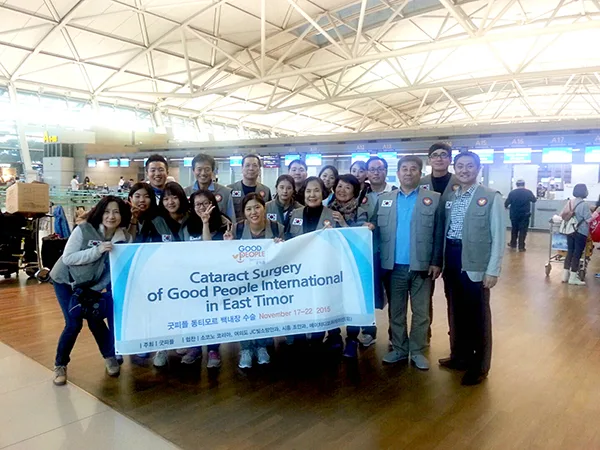
The process of seeking my family’s support and preparing for the mission was not easy, but that made the experience even more meaningful. It also gave me an opportunity to seek God’s heart more deeply throughout the journey.
Preparing for the mission was far more demanding than I had expected. While continuing our regular surgical schedule, we used every spare moment to prepare and organize the supplies needed for the mission.
About a week before our departure, we began thoroughly inspecting the medical equipment and packing everything in earnest. During previous missions, I had not stayed behind to help with this part of the preparation, so this was the first time I realized just how much work was involved.
I felt sorry when I remembered the times I had gone home early without helping. As the preparations progressed day by day, it finally began to feel real: “We are really going.”
On Tuesday, we came to work, completed a final inspection, loaded all the equipment, and headed to the airport.
I assumed that the airport would not be too crowded because it was a weekday, but I was mistaken. Although it was not as busy as peak travel season, there were still many travelers.
Our trip got off to a somewhat difficult start because of problems with the travel agency. Checking in more than 30 pieces of luggage was a major task in itself.
Thankfully, the experienced members of our team knew exactly what to do. Despite the confusion, everything was handled smoothly, and we were able to hurry through the airport and board the plane on time.
Timor-Leste was much farther away than I had imagined.
It took seven hours to fly from Incheon to Bali. Because there was only one flight per day to Timor-Leste, we then had to wait nine hours at the airport. From Bali, we took another two-hour flight before finally arriving in Dili, the capital of Timor-Leste.
Although the country felt so far away, I found it fascinating that it is located at almost the same longitude as Korea and therefore has little to no time difference.
We arrived near the end of the dry season. The dry season there reminded me of winter in Korea.
There were a few green palm trees here and there, but most of the trees had dried up under the intense sunlight and stood bare without leaves. It was surprising to see so many leafless trees in such a warm country.
We were told that once the rainy season begins, the entire landscape becomes lush and green, much like summer in Korea.
It reminded me that every country experiences its own distinct changes of season.
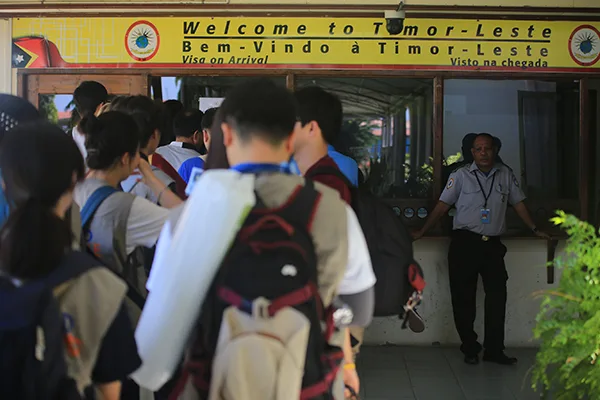
Another interesting thing I noticed was the way people spoke. The local language sounded extremely fast, so I expected the people to be equally fast-paced. In reality, however, their movements and daily lives seemed very relaxed and unhurried.
It was very different from Korea, where we are so accustomed to saying, “Hurry, hurry.”
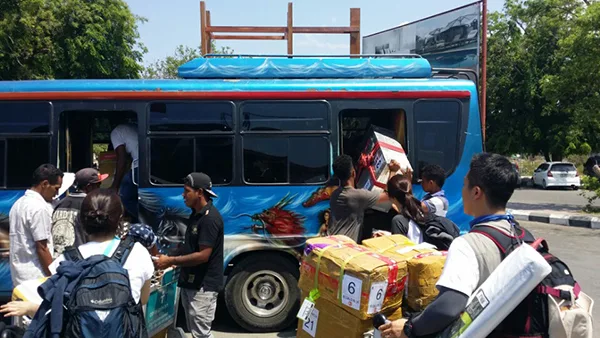
The place where we would serve was Baucau, located another four hours away from Dili by bus.
The road was extremely rough. At times, the bus drove dangerously close to the edge of steep cliffs, making me feel nervous, but the local driver remained calm and navigated the road with great skill.
As we traveled, we saw sloping hillsides and animals scattered throughout the landscape. Most of the animals appeared to roam freely.
Perhaps because of the scenery, I kept thinking of places described in the Bible. It felt like a land where Moses might once have lived, or where David might have tended his sheep.
After a long drive, we finally arrived in Baucau.
We were told that the region was about the size of Busan, yet it had only one hospital. There was no medical school, and very few local physicians were available. Doctors had to come from other regions to provide care, which showed just how limited the local medical system was.
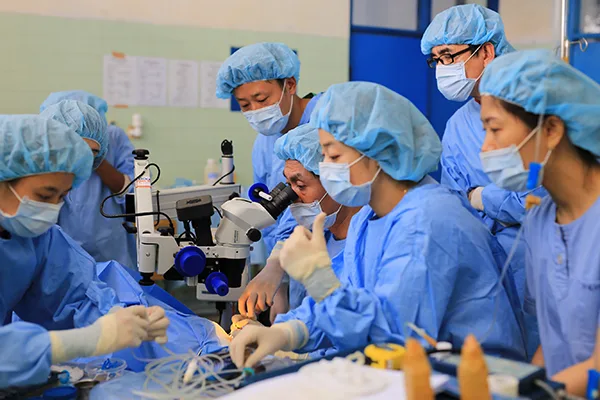
The hospital consisted of several separate buildings. Our team moved our equipment into the building containing the operating rooms and began setting up so that surgery could proceed smoothly the following day.
The scrub station was broken, making proper surgical handwashing appear almost impossible. Even so, surgeries were regularly performed in that operating room.
We thanked God for allowing us to arrive safely and prayed that every surgery would go well. Afterward, we went to our lodging, ate dinner, and brought our first long and exhausting day in Timor-Leste to a close.
On the second day, we began with worship, had a simple breakfast, and traveled to the hospital to prepare for surgery.
Even after seeing it again, the operating environment felt extremely limited compared with what we were accustomed to in Korea. We worked quickly to prepare the room, and the surgeries began.
A surgical team from another country had already visited shortly before us, so fewer patients came than we had expected.
At the same time, it seemed that some local residents did not fully understand why surgery was necessary. Because I remained inside the operating room, I was unable to learn the personal stories of many of the patients, which I found somewhat disappointing.
Still, it felt as though the people who truly needed our help were the ones who came to us.
Because another team had already treated many of the less severe cases, most of the patients remaining had serious conditions. As a result, the surgeries were especially challenging.
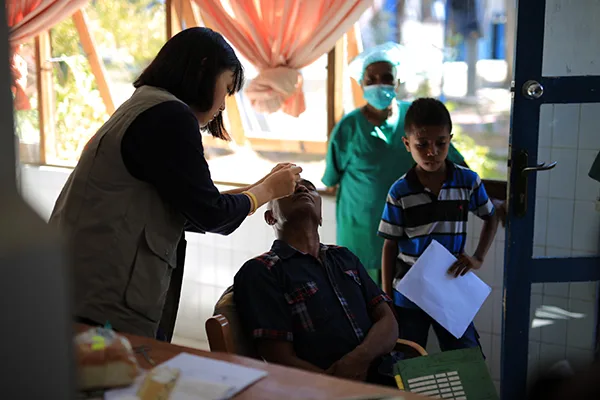
The patients I remember most clearly from the first day were Hezekiah, who underwent strabismus surgery, and a nine-year-old boy who came for surgery due to a traumatic cataract.
The boy’s right eye had been badly injured. Although the cataract was removed, the retina had already been severely damaged, so the surgery could not restore meaningful vision.
It was heartbreaking.
He had entered the operating room with such courage, which made the situation even more painful to witness. I could not help thinking, “What if he had received surgery just a little earlier?”
At the same time, I found myself realizing once again how fortunate I am to live in a place with access to such good medical care. Gratitude naturally filled my heart.
After the first day of surgery ended, I suddenly realized how thirsty I was.
The weather had been hot, and I had been under intense pressure, but while the surgeries were underway, I had not noticed how much I was sweating or how thirsty I had become.
The moment surgery ended, the thirst hit me all at once. That was when I realized just how deeply focused I had been.
The water I drank afterward tasted incredible. It reminded me of the refreshing feeling of drinking a cold glass of water on the hottest day of summer.
On the third day, because we still had a long journey ahead and patients had been waiting since early morning, the surgical team decided to begin earlier.
We arrived at the hospital at 6:30 a.m. to prepare for surgery.
We left without breakfast, but our administrative director continuously handed us small things to eat, allowing us to work without becoming too hungry.
After completing our preparations, we began surgery.
There was another patient with strabismus that day. I also heard that Hezekiah, who had undergone strabismus surgery the day before, was extremely happy with the result. Hearing that made me feel deeply encouraged.
The patient that day was an 18-year-old girl. She was so small that she could easily have been mistaken for an elementary school student.
Thankfully, her surgery was completed successfully.
Although we did not treat a large number of patients during the two surgical days, none of the cases were simple. The surgeries required great concentration, and the heat made the work even more difficult.
Because of this, I found myself seeking the Lord in every moment.
I believe I was able to witness God working through each surgery. Although the procedures may appear to be carried out by human hands, I was reminded that nothing can truly be accomplished without God’s help and guidance.
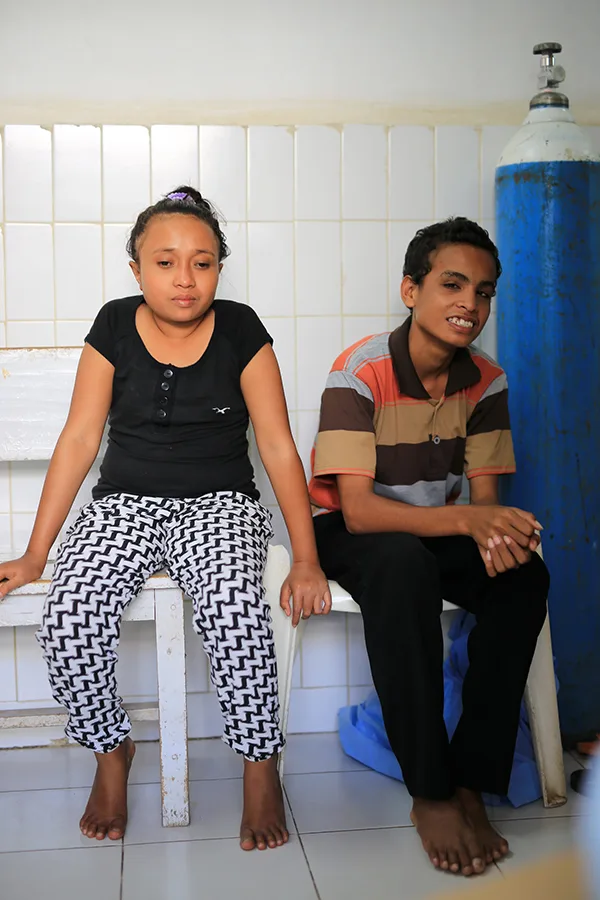
Above all, I was deeply grateful to experience once again that God looks not at outward appearances, but at the heart.
Some of the procedures may have been short and might even be described as simple, but many helping hands were required to make each surgery possible.
Church elders, senior deaconesses, deacons, students, and teachers from Tree of Life School joined us to support the mission.
They served wholeheartedly without holding anything back. Through their dedication, I learned again what it means to serve and was able to feel God’s heart more deeply.
After the two days of surgery were completed, we began packing all the equipment for the return journey.
Thanks to the elders, deacons, and senior deaconesses who seemed capable of solving any problem, everything moved forward quickly and efficiently.
It had taken nearly an entire week to pack everything before the mission, yet somehow the return packing was completed with surprising speed. I was truly amazed.
After we finished packing, we ate lunch and traveled back to Dili, where the airport was located.
When we first arrived in Dili, I had thought it seemed very underdeveloped. However, after visiting Baucau, Dili definitely felt like a capital city.
We stayed there for one night and visited the mission center the following day for our final worship service together.
The mission center was a small two-story building.
Elder Dong Je Baek, who had accompanied us, shared his testimony. Through his message, I was once again reminded that God is alive and at work.
After the service, the missionary picked apples and coconuts for us to eat and drink. They were delicious.
Following worship, we traveled to the airport to board our flight to Bali.
Once again, checking in all the luggage was difficult, but we handled it successfully and arrived safely in Bali.
However, the journey from Bali back to Korea was extremely challenging.
We had already boarded the aircraft when we were suddenly told to get off again.
Handling all the luggage was already one of the most difficult parts of the trip, but due to a mechanical issue with the aircraft, we were informed that we would have to wait another 12 hours. We then had to collect all the luggage and check it in again.
Unlike Timor-Leste, Bali remained extremely hot even after sunset.
At a time when we would normally have been sleeping, we had to wait more than an hour just to receive our luggage. It was very late at night before we were finally taken to a hotel arranged by the airline.
I was disappointed because it was Sunday and we had been unable to return home or attend worship.
However, the principal of Tree of Life School, who had traveled with us, was also a pastor. Thanks to him, we were able to hold a worship service and give glory to the Lord.
It felt like an unexpected event God had prepared especially for us, and I was incredibly thankful.
Throughout the preparation process and while serving in the mission field, there were many moments when I wondered what kind of heart and attitude I should have.
Each time I asked God, He eventually helped me understand in His own way.
Because the circumstances and environment were so difficult, I had no choice but to seek God’s guidance in every moment.
Even so, regardless of the situation, the Lord faithfully accomplished everything He had planned through our team.
I can truly say that it was a time filled with grace.
I praise the Lord for bringing us home safely through the prayers and intercession of so many people.
The Lord did it all!


